Introduction: The Messy Toy Closet Problem
Imagine you have a giant closet full of toys. You have action figures, lego bricks, board games, and crayons.
At first, you only have 5 toys. It's super easy to find what you want! You just look in the closet and grab it.
But as time goes on, you get more and more toys. Soon, you have one million toys! You just throw them all into the closet in one big, messy pile.
One afternoon, you want to find one specific tiny green Lego brick.
- You open the closet door, and a huge mountain of toys falls on you.
- You have to dig through the pile, looking at every single toy, one by one.
- It takes you three hours just to find that green Lego brick!
This is exactly what happens to computers when they try to store lots of information (like user accounts, high scores, or messages) in simple text files. When the pile of information gets too big, finding one specific piece of information makes the computer slow and tired!
What is the solution? A Database!
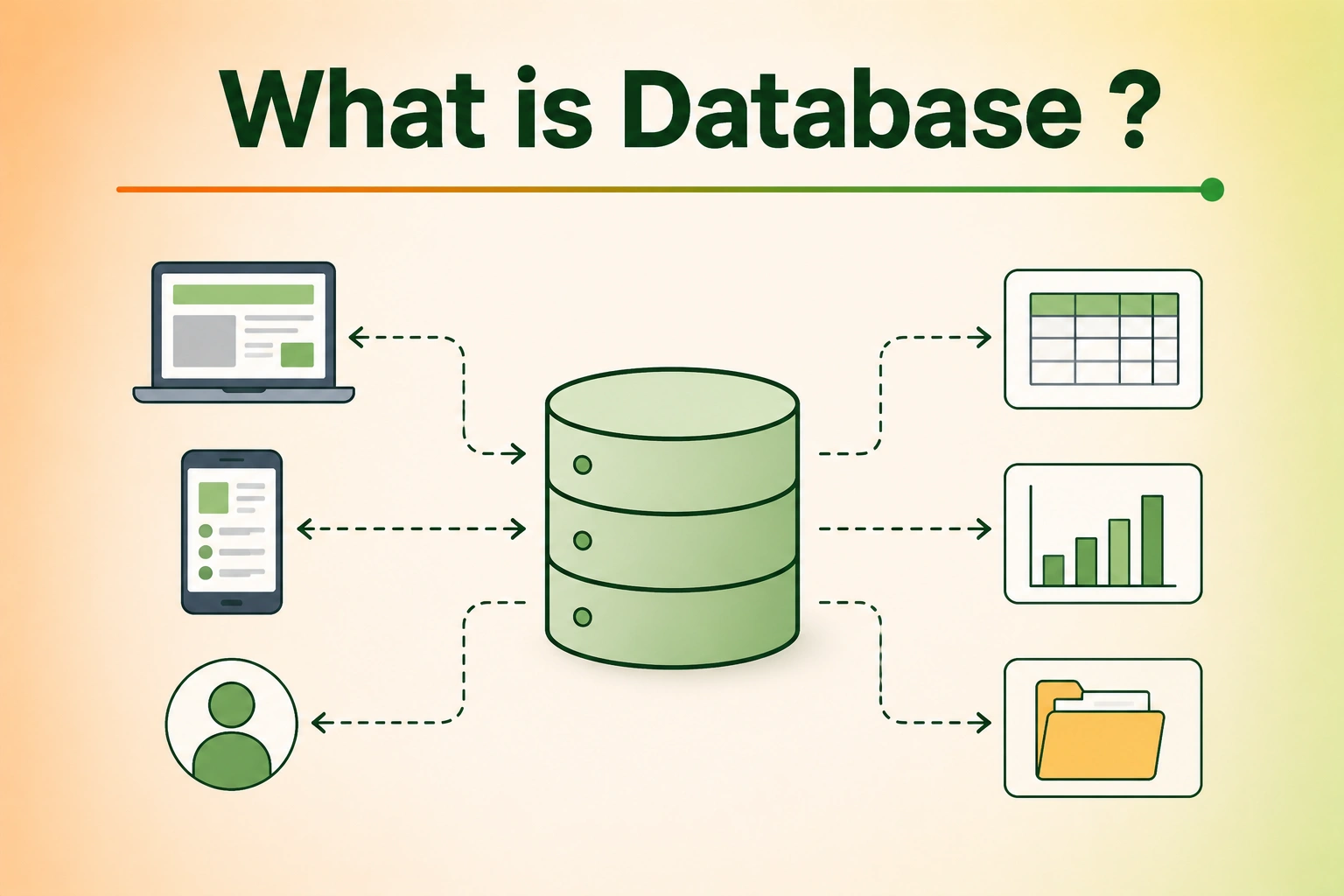
A database is like a magical toy chest with labeled drawers, dividers, and a smart robot assistant. When you want the green Lego brick, you don't dig. You just ask the robot helper: "Please get me the green Lego brick from the Lego drawer." and BAM! The helper gives it to you in less than a second!
Why Do Databases Exist?
You might ask: "Why can't we just use a simple text file on our computer to save everything?"
Well, databases exist because they solve three major problems that normal files can't handle:
- Super Speed (Fast Searching): If you have a file with 10 million usernames, and you want to log in, the computer has to read the file from the top to the bottom to find your name. A database uses a special trick called an Index (which is like a book's table of contents) to jump straight to your name instantly!
- Teamwork (Multiple Users): Imagine you and your friend are both writing in the same notebook at the exact same time. Your pens will bump, and the pages will get messy! Normal files only let one program write at a time. Databases are built for teamwork—millions of people can look at and update a database at the exact same moment without bumping into each other!
- Safety (No Lost Data): What happens if your computer loses power while writing a file? The file gets corrupted and breaks! Databases have a superpower called Transactions. They make sure that if something goes wrong (like a power cut), the database either completes the job perfectly or resets itself to safety. No half-saved messes allowed!
Files vs. Databases: The Ultimate Showdown
Let's compare a normal file to a database:
| Feature | Simple Files (Text/CSV) | ️ Databases |
|---|---|---|
| Organization | Just lines of text, like a diary. | Neat tables, like a grid of folders. |
| Speed | Gets slower and slower as it grows. | Stays lightning-fast even with millions of items! |
| Sharing | Only one person/program can write safely. | Millions of people can read/write at the same time. |
| Security | Hard to lock specific parts. | Easy to set secret keys and permissions. |
| Crash Protection | Easy to lose data if computer crashes. | Automatically saves and recovers data safely. |
Core Database Concepts
Inside our magical database toy chest, we have four main jobs we do. Developers call these CRUD operations:
- Create: Putting a new toy into the chest (e.g., signing up for a new account).
- Read: Looking at a toy in the chest (e.g., viewing your profile page).
- Update: Painting a toy a new color (e.g., changing your password or profile picture).
- Delete: Throwing away a broken toy (e.g., deleting a post).
Instead of using hands, we talk to databases using a special language. The most famous one is called SQL (pronounced "Sequel"), which stands for Structured Query Language. It is just a simple way of asking the database for exactly what you want!
Real-World Examples: How Your Favorite Apps Use Databases
Every app you use has a database running behind the scenes. Here is how they use them:
1. Instagram
When you scroll through Instagram, how does the app know which pictures to show you?
- The Closet (Messy File Way): Reading a giant text file containing every post ever uploaded in the world, filtering out yours. (The app would freeze!)
- The Toy Chest (Database Way): Instagram asks its database: "Give me the latest 20 photos where the user is 'Spiderman'." The database finds them in milliseconds and displays them on your screen.
2. Amazon
When you add a toy to your shopping cart, how does Amazon remember it when you close the tab?
- The Closet (Messy File Way): Saving your cart on a text document on Amazon's desktop. (It would get mixed up with other shoppers' carts!)
- The Toy Chest (Database Way): Amazon's database has a table for carts. It updates your record: "Set cart_items = ['Lego Star Wars'] where user_id = 9876."
3. LeetCode
When you solve a coding problem, how does your rank go up?
- The Closet (Messy File Way): A spreadsheet where someone manually types your score. (Too slow!)
- The Toy Chest (Database Way): LeetCode's database runs a command: "Add 10 points to score where user_username = 'CodeNinja'."
Let's Look at Some Code!
Let's see the difference in code between reading/writing to a simple file versus querying a database.
Complete Implementations (File I/O vs. Database Query)
Common Mistakes
- Treating Databases Like Files: Don't download a whole database table onto your computer just to search it! Always let the database do the searching (filtering) and only download the single result you need.
- Forgetting to Backup: Just because databases are super safe doesn't mean they can't break if a computer hardware melts. Always back up your database to another computer!
- No Indexes: If you don't create an Index on fields you search often (like
username), the database has to fall back to scanning every row one-by-one—making it as slow as a normal text file!
Summary
- A database is a highly organized electronic filing system for data.
- It is faster, safer, and better for teamwork than simple files.
- Apps like Instagram and LeetCode use databases to serve information instantly.
- We talk to databases using languages like SQL (Structured Query Language).